The people setting the pressure are running out.
Gallup's 2026 State of the Global Workplace found manager engagement worldwide fell from 27% to 22% in a single year. Almost every wellbeing programme in the building is aimed at the people who report to them.
The manager is the variable
Only 31% of US employees were engaged at work in 2025, unchanged from the year before and down from 36% in 2020, by Gallup's count. Worldwide, manager engagement has fallen nine points since 2022.
The American Psychological Association's 2025 Work in America survey asked more than two thousand workers about their manager. Of those satisfied with that relationship, 10% described their workplace as toxic. Of those who were not, 55% did. Good or excellent mental health: 81% against 54%.
That is an association, not proof of cause, and APA says so. It points the same way as Gallup's long-standing estimate that managers account for at least 70% of the variance in engagement between teams. Strain is not evenly spread. It concentrates under particular people.
What the usual budget actually buys
An app for the person under the pressure, and nothing for the person generating it.
Employee assistance programmes are the default response, and their use is typically below 10% of employees. The US Surgeon General's 2022 framework calls them significantly underutilized. Resilience training, meditation apps and stress webinars share the same flaw: all of them work on the person receiving the pressure, and none of them go near the room where it starts.
No regulation will do this for you
There is no specific federal OSHA standard for psychosocial hazards. What exists is guidance. ISO 45003, published in 2021, sets out how to manage psychosocial risk inside a health and safety system. The US Surgeon General's Framework for Workplace Mental Health and Well-Being, released in October 2022, names five essentials, among them Protection from Harm and Mattering at Work, and says leaders and supervisors can have a powerful impact on wellbeing by setting organizational culture.
Guidance tells you where the hazard is. It cannot change the person generating it. When the risk assessment says “leadership behaviour”, you have reached the end of what a process can do, and the beginning of what has to happen in a room.
The cost sits highest where the strain starts
A 2025 model in the American Journal of Preventive Medicine estimated what burnout costs a US employer each year: about $4,000 for an hourly employee, $10,824 for a manager and $20,683 for an executive. For a company of a thousand people, roughly $5 million a year.
In 2015, researchers from Stanford and Harvard Business School estimated that more than 120,000 deaths a year, and 5% to 8% of annual healthcare costs, are associated with and may be attributable to how US companies manage their workforces.
What we are not
We are not a compliance product, and we are not therapy.
We work with leaders on the nervous system underneath their behaviour: how much pressure they can carry, how they recover, and what they pass to the people below them. We facilitate. We do not diagnose or treat. Participation is voluntary, confidentiality is agreed in writing before day one, and a registered psychologist is named in every contract. The safeguards, in full.
The practitioners already here.
Based in California and North Carolina, and drawing on the rest of the network when a programme needs it. Meet all of them.
 Bradley McDevittChapel Hill, North Carolina, USAExecutive coach, ICF Associate Certified Coach. MA, Depth Psychology, and adjunct faculty at Pacifica Graduate Institute.Henosis Certified
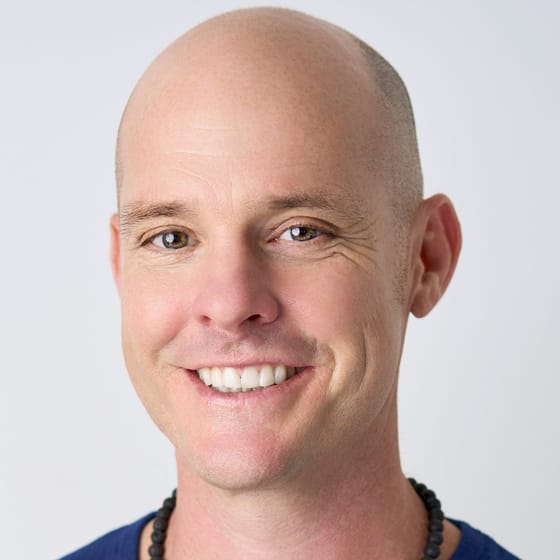 Henry Kagey, PhDSan Diego, California, USACertified Rolfer and somatic educator, PhD, UC Berkeley. Structure, movement and the body under load.Henosis Certified
Gallup's 2026 State of the Global Workplace found manager engagement worldwide fell from 27% to 22% in 2025, and only 31% of US employees were engaged. In APA's 2025 Work in America survey, 55% of workers unhappy with their manager described their workplace as toxic, against 10% of those satisfied with one. A 2025 American Journal of Preventive Medicine model puts the cost of burnout at about $10,800 a year per manager and $20,700 per executive. EAPs, the usual response, are typically used by fewer than one employee in ten.






Start with a Situation Briefing.
Twenty minutes, no charge. If we are not right for you, we will say so, and we will point you to the people who should be doing it.
Which one is closest, right now?
The training itself, tier by tier.
Leadership training